Social mobility and low birth
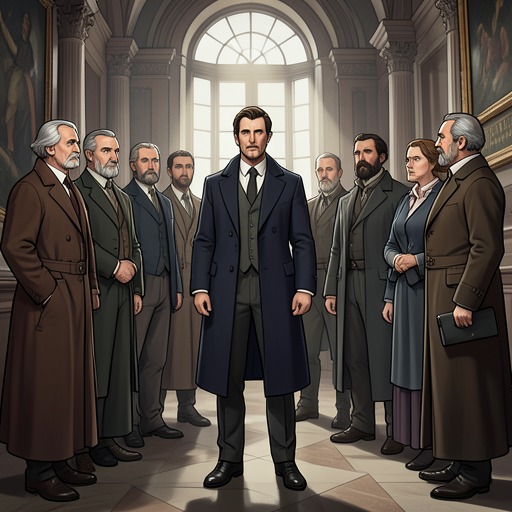
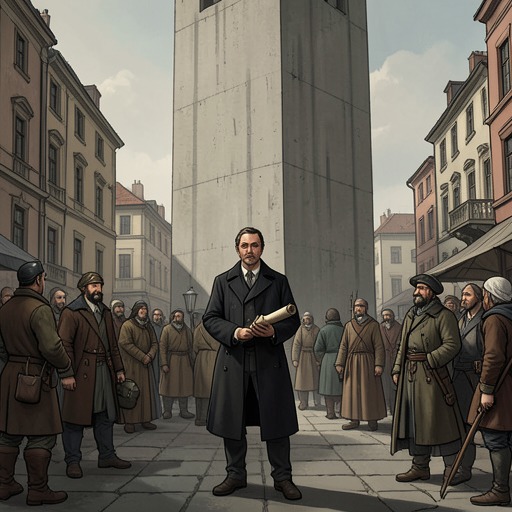
Wolf HallSocial mobility and low birth in Wolf Hall is a contested passage through a society where birth limits access but does not wholly determine power. Thomas Cromwell’s movement from the son of a blacksmith to a member of Parliament and the king’s council makes advancement tangible; the insults directed at Thomas Wolsey’s origins, and Cromwell’s own recollection of boys gathered outside his father’s forge, show how quickly achievement can be measured against inherited rank. The book presents mobility not as arrival beyond class, but as a continuing negotiation with patronage, public judgment, and the people still waiting below.
Origins and Access
In the winter of 1529–spring 1530, Rafe Sadler secures Cromwell a seat for Taunton in the Commons. Seats are largely controlled by lords, bishops, and the king, with electors commonly following pressure from above. Taunton is Wolsey territory; Cromwell’s entry depends on the king’s approval and on Thomas Howard, Duke of Norfolk’s consent. His arrival in Parliament is therefore a real change in status, but not an escape from patronage: the opening comes through powerful men, and Rafe’s reconnaissance of Norfolk’s intentions is part of the work that makes it possible.
Cromwell’s own account of his origin is spare: when Katherine of Aragon asks whether he was a blacksmith, he answers that it was his father’s trade. She replies that the blacksmith makes his own tools. The exchange turns a mark of low birth into an image of self-making, without pretending that craft erases hierarchy. Cromwell’s advancement has required him to fashion the means of his own influence, while the question itself reminds him that other people can still reduce his position to his father’s occupation.
Wolsey and the Price of Rank
Cromwell’s allegiance to Wolsey exposes the cruelty and instability of social rank. When Norfolk complains that the cardinal might be trying to carve out a kingdom in the north, he calls him a butcher’s boy. The insult invokes Wolsey’s humble origins to discredit his power at the moment his planned enthronement at York and northern church convocation appear politically threatening. Cromwell privately imagines that Wolsey would have made an excellent king, a judgment that sets the cardinal’s ability to rule against the contempt attached to his birth.
Norfolk also recognizes the cost of Cromwell’s loyalty. He tells Cromwell that neither he nor the king can fault what he has done for a disgraced and fallen man, and regrets that Cromwell ever encountered Wolsey because he might otherwise have worked for Norfolk. The recognition is both praise and recruitment: Cromwell’s service has made him valuable, but a noble patron still expects him to remember his place. Their exchange shows mobility as a shift in leverage, not the disappearance of rank. Cromwell can negotiate with the duke, yet the duke can still define their relationship in hierarchical terms.
The cardinal’s arrest makes the social judgment more public. At Austin Friars, George Cavendish recounts that townspeople knelt and wept as Wolsey was taken away, and that they later stood through the night with candles in Doncaster. After Wolsey’s death, officials and the mayor are summoned to view his coffin so no rumor can claim he has escaped to France. Some make remarks about his low birth. Cavendish insists that they would not have dared make them to Cromwell’s face. The contrast gives Cromwell’s rise a particular force: he has acquired enough standing to command deference, while his former master’s origins remain available to insult even after his fall and death.
A Face Made for Advancement
At Austin Friars, Cromwell sees Londoners outside his gate identifying the liveries of Norfolk’s men and the Earl of Wiltshire’s servants. He recognizes them as the sons of men who used to gather by his father’s forge each autumn, gossiping and warming themselves. They are boys like the one he had been, restless and waiting for something to happen. The scene links his present visibility as a royal councillor to the remembered world of his childhood: advancement has carried him into the household traffic of the powerful, but he can still recognize the social position from which those boys watch it.
Cromwell understands public advancement as requiring performance. He recalls Erasmus’s advice to put on a mask each morning and applies it wherever he wakes, whether in a castle, inn, or nobleman’s house. Since entering the king’s council, he has watched other faces for the instant of doubt or resistance before they settle into courtly composure. His arranged face is not merely concealment; it is a practical response to an institution in which access depends on reading others and controlling what they can read in him. The son of a blacksmith has learned the signs of power without being born to its ease.
Mobility as Responsibility
Cromwell’s relation to the young people around him gives his rise a material consequence. At Austin Friars he has beer and bread sent to the men waiting at his gate, and broth when the mornings grow colder. In the kitchens, he records what the newly hired boys can do: Simon can dress a salad and play a drum; Matthew can say his Pater Noster. He considers them trainable, imagining that one day they may go upstairs as he did and take a seat in the counting house. The movement upward is no abstraction here: it begins with food, warm and decent clothes, attention to ability, and the possibility of learning work that leads beyond the kitchen.
That solicitude grows out of remembered deprivation. Cromwell recalls the profound cold of store rooms at Lambeth and the stray snowflakes drifting through the rafters at Wolsey’s kitchens at Hampton Court. His effort to keep the boys clothed and discourage them from selling their clothes answers those conditions directly. The novel thus places his ascent beside a smaller, deliberate effort to make advancement possible for others, while leaving intact the hierarchy that makes such care necessary.
Influence, Office, and the Limits of Birth
In the Commons, Cromwell uses parliamentary procedure to turn political opportunity into influence. When he introduces a bill to suspend the payment of annates to Rome, he calls for a division of the House, an unusual tactic that makes members take sides in the king’s presence. The king watches who supports the measure and who opposes it, then gives Cromwell a grim nod. In the Lords the method does not suffice: the king must attend and argue his case in person. Cromwell’s advancement therefore operates through institutional skill as well as personal favor, though the old aristocracy retains power to resist. Families with their own claim to the throne support the pope and Katherine and are not yet afraid to say so; Cromwell identifies opponents and splits them where he can.
His offer to Thomas Wriothesley shows how court advancement remains a contest over office and loyalty. Cromwell proposes that, if confirmed as Master Secretary, he will put Wriothesley in charge at the Signet; he then tells him to seek a better offer from Stephen Gardiner, who is still Secretary. The maneuver treats office as a source of fees and allegiance as something men hedge between rival patrons. Cromwell’s rise gives him the power to make such offers, but the scene offers no simple meritocratic order: access is still negotiated through competing masters, threatened ruin, and the prospect of preferment. Low birth can be overcome as a barrier to entry, but the court does not cease to be a place where rank and patronage shape who advances.